
What to expect from a residential junk removal appointment in Oahu
By Nadia Ferraro · Updated 2026-06-26
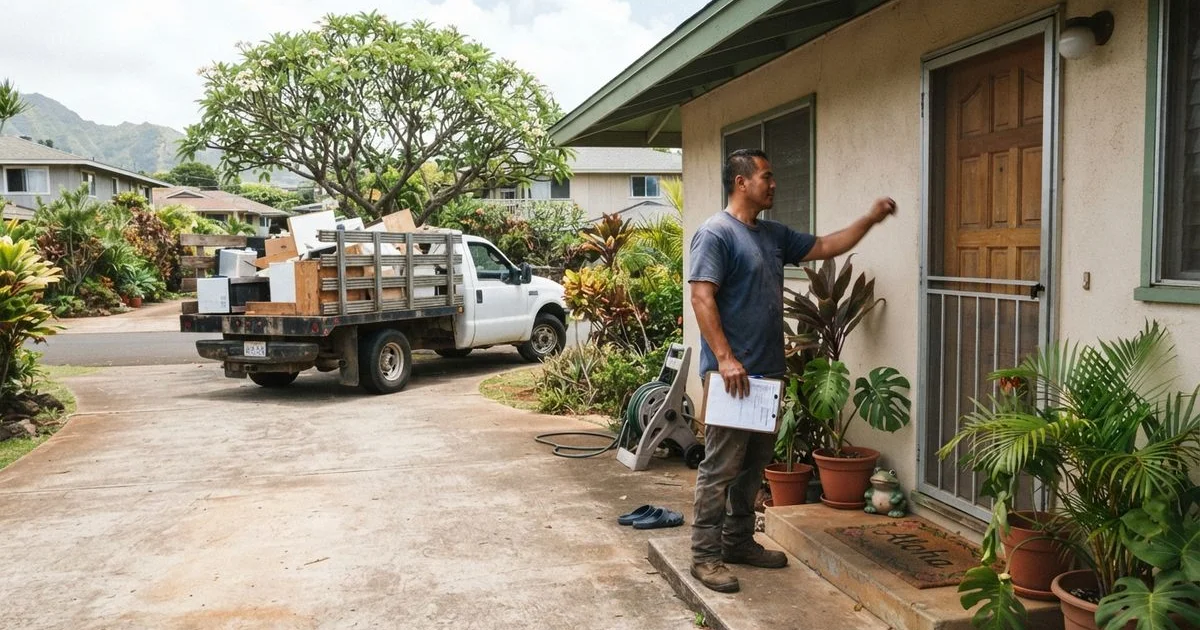
Booking a junk removal crew for the first time on Oahu can feel like an open question mark: will they show up on time, what do they actually take, and what is expected of you while they work. The process is more predictable than it looks once you have been through it once, so here is what a standard residential appointment usually looks like from the first phone call to the truck pulling away.
Before the crew arrives
Most jobs start with a quote, either over the phone, by text with a few photos, or with an in-person walkthrough for larger cleanouts. A residential junk removal crew will typically ask what you are getting rid of, roughly how much of it there is, and whether there is anything unusual about access, like stairs, a gated building, or a long driveway.
You will usually get a window rather than an exact time, something like an hour or two-hour arrival block. Same-day and next-day scheduling is common on Oahu, especially with smaller residential crews, but weekend and holiday slots fill up faster than weekdays. If you are clearing out ahead of a home sale, the junk removal before selling a house guide walks through how to time the appointment around your listing date.
What the crew does on site
When the truck arrives, expect a quick walkthrough first. The crew confirms what is being removed, points out anything they cannot take (certain hazardous materials, for example), and gives you a final price based on what they actually see versus what was described on the phone. This is the moment to speak up if the number does not match your expectations.
From there, the crew loads the truck. For a small job this might be one person; for a half truckload or more, expect two to three people working together, especially if there are stairs or a long carry involved. A good crew will:
- Confirm each item with you before it leaves the property, especially anything of obvious value.
- Protect floors, walls, and doorframes when moving bulky furniture or appliances through tight spaces.
- Sweep or tidy the area once everything is loaded, rather than leaving debris behind.
- Separate out anything with donation or recycling value if you have asked them to.
Payment and what comes after
Payment is usually collected once the job is done and the final volume is confirmed, whether that is by card, cash, or another method the crew accepts. Ask for a receipt or invoice that breaks down what you paid for, particularly if the final price differs from the initial phone quote.
What happens to your junk afterward varies by company. Furniture and appliances in decent shape often go to local donation partners rather than the landfill. Metal gets pulled out for scrap value. Whatever is left, genuine trash with no reuse or recycling value, typically goes to a transfer station and eventually the landfill or H-POWER, Oahu’s waste-to-energy facility. If keeping items out of the landfill matters to you, ask about this before booking rather than after the truck leaves.
A quick pre-appointment checklist
| Before the crew arrives | Why it matters |
|---|---|
| Confirm the arrival window | Avoids waiting around all day for a vague estimate |
| Flag anything for donation or keep-aside | Prevents items from being hauled by mistake |
| Clear a path to the items | Speeds up loading, especially for stairs or tight hallways |
| Ask how the final price is calculated | Avoids surprises once the truck is loaded |
| Get a receipt or written confirmation | Gives you something to reference if a dispute comes up later |
Most residential jobs on Oahu go smoothly when both sides communicate clearly upfront: what you need gone, how it will be priced, and what condition you expect the space left in. A crew that walks you through each of these steps before starting work is usually one worth booking again.
If this is your first time booking
First-time customers sometimes feel unsure about how much detail to share when requesting a quote. More information generally works in your favor: mention roughly how many items, what rooms they are coming from, and any access quirks about your specific home, even small ones like a gate code or a shared driveway. Crews that serve a lot of different housing types across Oahu, from single-family homes to walk-up apartments, appreciate the extra context, and it usually means the crew that shows up is better prepared for your specific job.
For more on how we evaluate providers across categories, see our methodology, or head back to the home page to browse other services this directory covers.
FAQ
- Do I need to sort my junk before the crew arrives?
- No, but it helps. Most crews will sort as they load if you flag anything you want donated, recycled, or kept, but pointing that out ahead of time makes the job faster and reduces the chance something gets hauled by mistake.
- How long does a typical residential pickup take?
- A few items or a quarter truckload usually wraps up in under an hour once the crew arrives. A half to full truckload, or a job with stairs and tight access, can run one to three hours.
- Do I need to be home for the whole appointment?
- You need to be there to confirm what is being removed and to pay at the end, but many crews are fine with you stepping away once the job is underway, as long as someone can answer questions if they come up.
- What happens to the stuff after it leaves my house?
- It depends on the crew and the items. Usable furniture and appliances often go to donation partners, metal gets pulled for scrap, and only what cannot be reused or recycled ends up at a landfill or the H-POWER waste-to-energy plant.