
Helping an aging parent downsize in Oahu: a practical guide
By Nadia Ferraro · Updated 2026-07-06
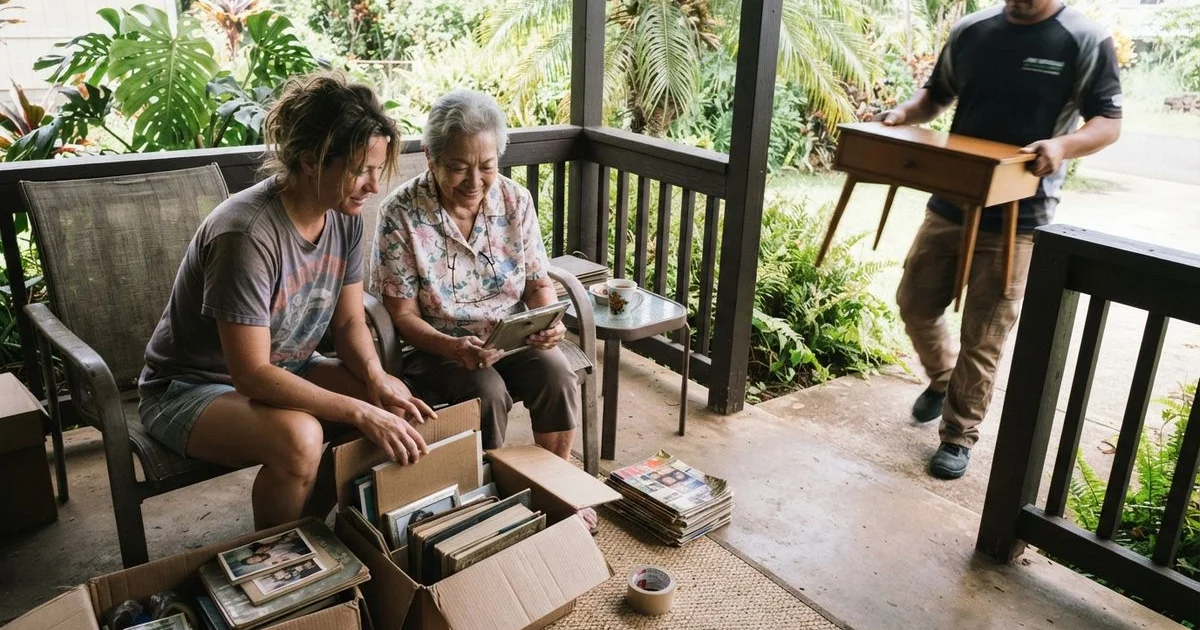
Helping a parent downsize is rarely just about moving boxes. It usually involves a lot of small, emotionally loaded decisions about what to keep, what to let go of, and who gets a say in the process. On Oahu, where many families have lived in the same home for generations, the volume involved can be significant, and rushing it tends to backfire.
Starting the conversation
Bringing up downsizing works better around a specific, practical reason than a general conversation about getting older. “The stairs are getting hard to manage” or “moving closer to the grandkids would mean less driving for everyone” tends to land better than an open-ended suggestion that a parent might feel is really about their independence being questioned.
It also helps to let your parent lead on pace, at least at first. Decisions about a lifetime of belongings are not ones most people want to make quickly, and pushing too hard early on can make someone dig in rather than engage with the process at all.
Sorting before hiring a crew
Most families do an initial pass through the home themselves before bringing in a cleanout crew, specifically to identify anything meaningful: photographs, important documents, jewelry, or items with real sentimental weight that should never end up in a general removal pile by accident. This step matters more than people expect, since once a crew is working through a full house, it becomes much harder to catch every individual item that should have been set aside.
A simple three-pile approach, keep, donate, and unsure, gives structure without forcing final decisions on everything at once. The “unsure” pile can be revisited in a second pass rather than forcing a decision in the moment.
What to expect from a cleanout crew
Once the sorting groundwork is done, an estate and hoarding cleanout crew can typically handle the bulk removal: furniture that is not being kept, old appliances, boxes of items already marked for donation or disposal. Ask ahead of time whether the crew will help with sorting as they go, or whether they expect everything to already be separated, since this varies by provider and changes how much prep work falls on your family. If decades of belongings have piled up to the point of blocked walkways or other safety concerns, the guide to hoarding cleanup health and safety covers how professionals handle those more serious cases.
A pacing framework that tends to work
| Stage | What it involves |
|---|---|
| First conversation | Frame around a specific, practical reason, not aging in general |
| Family sorting pass | Pull out anything sentimental or important before a crew is involved |
| Three-pile sort | Keep, donate, unsure, revisited over more than one session |
| Crew-assisted removal | Bulk volume handled once sorting decisions are mostly settled |
| Final walkthrough | Confirm nothing meaningful was missed before the space is cleared |
When patience runs short
It is normal for the process to take longer than planned, and normal for a parent to change their mind about specific items more than once. Doing the work in smaller sessions across several weeks, rather than one exhausting weekend, tends to produce fewer regrets on both sides. If a hard deadline exists, a move date or a lease ending, say so clearly early on rather than letting the pressure build silently as the date approaches.
Getting outside support if needed
If family dynamics make this process difficult to manage alone, some cleanout providers and senior-focused organizations on Oahu have experience mediating these conversations as part of the job. It is worth asking directly whether a provider has handled downsizing situations before, not just general estate cleanouts, since the pacing and sensitivity required are genuinely different.
Involving siblings or other family members
If more than one adult child is involved in a parent’s downsizing, disagreements about pacing or what to keep are common, even in close families. Deciding early on who has final say on ambiguous items, or agreeing that anything contested goes into the unsure pile rather than being argued over in the moment, tends to keep the process from stalling. It also helps to update family members who are not physically present, especially if they live off-island, so decisions do not feel like they happened without their input.
Downsizing does not have to mean an all-or-nothing move either. Some parents keep a smaller home or a single room’s worth of belongings even after a larger downsizing pass, which can make the whole process feel less like a loss and more like a practical adjustment. Respecting that middle ground, rather than pushing for a completely empty result, often makes the conversation easier for everyone involved.
For more on how we evaluate providers for this kind of work, see our methodology, or visit the home page to explore other categories that might fit alongside this process.
FAQ
- How do I bring up downsizing without it feeling like an ultimatum?
- Frame it around a specific, practical reason, moving closer to family, a smaller unit that is easier to maintain, rather than a broad conversation about aging. Concrete reasons tend to land better than general suggestions.
- Should I hire a cleanout crew or do it with family first?
- Most families do an initial pass themselves to identify anything meaningful, photos, documents, specific keepsakes, before bringing in a crew for the bulk volume. That way nothing gets removed that your parent did not knowingly agree to part with.
- What if my parent keeps changing their mind about what to keep?
- This is common and usually means the pace is too fast. Slowing down, doing the sort in smaller sessions, and revisiting the same room more than once tends to work better than pushing through in one sitting.
- Can a cleanout crew help sort, or do they only remove items?
- It varies by company. Some will help separate donation, keep, and disposal piles as they work; others expect sorting to be done before they arrive. Ask directly about this before booking.