
Estate cleanout after a death in the family: what to expect in Oahu
By Nadia Ferraro · Updated 2026-07-05
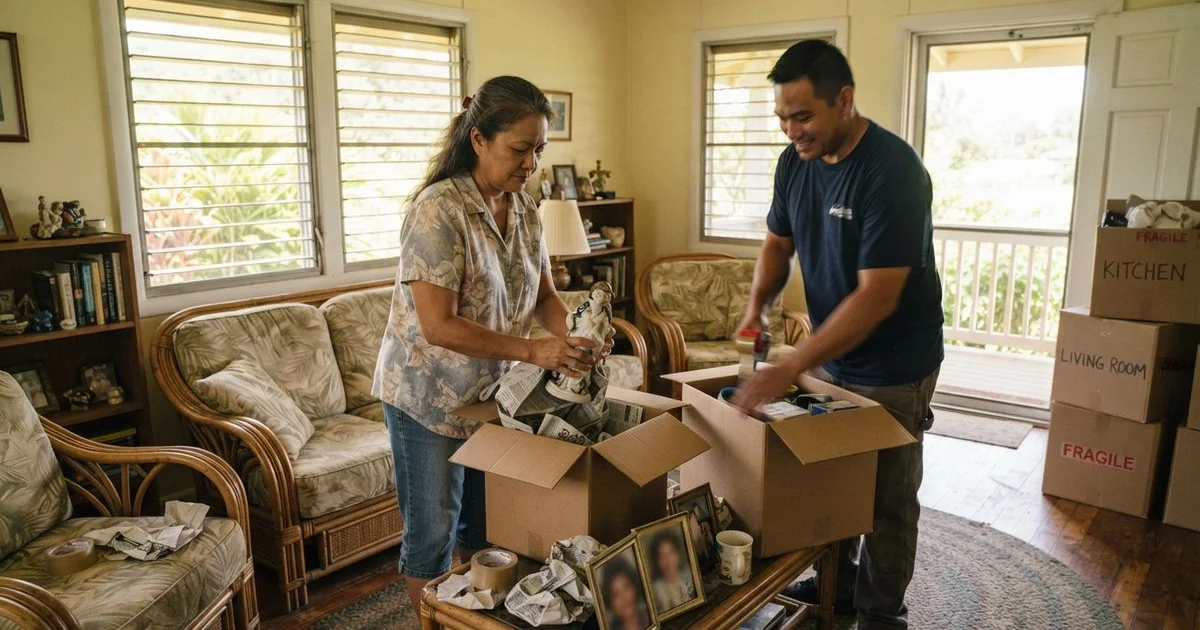
Clearing a home after losing someone is rarely just a logistics task. It usually means going through decades of belongings, some genuinely valuable, some sentimental in ways that have nothing to do with resale value, all while managing grief, family dynamics, and often a real timeline tied to a lease, a sale, or probate. Here is a grounded look at what a cleanout on Oahu typically involves, so you know what to expect before the process starts.
Starting with a walkthrough, not a truck
A responsible estate and hoarding cleanout provider will begin with a walkthrough of the home rather than showing up ready to load a truck immediately. This is your chance to flag rooms or categories that need special attention: a home office with important documents, a jewelry box, photo albums, or anything you have not had time to sort through yourself.
A written estimate should follow the walkthrough, not a phone-only guess. Estate cleanouts vary enormously in scope, a single downsized apartment is a different job than a full multi-generational family home, so pricing tends to be based on what the crew actually sees rather than a description over the phone.
What the process typically looks like
Most cleanouts move room by room rather than all at once. A crew working through a full home over several days will often set aside anything that looks obviously valuable or sentimental for family review before it gets boxed up or removed, and will ask before disposing of anything ambiguous, paperwork, photos, or personal effects that are not immediately identifiable as trash.
It is reasonable, and common, for family members not to be present for every hour of a multi-day cleanout. Grief makes extended time in a loved one’s home difficult for a lot of people, and a good crew understands that check-ins rather than constant supervision are normal.
A rough timeline to expect
| Home size or situation | Typical timeframe |
|---|---|
| Single room or small apartment | Often completed in a day |
| Full 2 to 3 bedroom home, moderate accumulation | Two to three days |
| Larger home with decades of belongings | Three to five days, sometimes longer |
| Situations requiring careful sorting for family review | Add time for pauses between rounds of review |
Where items end up
Furniture, appliances, and household goods that are still usable commonly go to local donation partners rather than a landfill. Metal gets pulled for scrap where it applies, and only what genuinely cannot be reused or recycled goes to disposal. If this matters to your family, ask directly how the provider handles donation and whether they can provide documentation for anything donated, which can be useful for tax purposes.
What to ask before booking
Ask how the crew handles items they are unsure about, whether they document what was removed (useful if other family members were not present), and how they bill: a flat rate by volume, or hourly crew time, since estate cleanouts sometimes run longer than expected once work is underway. Confirm whether the crew will leave the space broom-clean, which matters if the home is being sold or the lease is ending.
Taking it at your own pace
There is no requirement to clear an entire home in one visit. Some families prefer a first pass focused only on clutter and trash, then a second, more deliberate pass for anything requiring closer decisions. A provider willing to work at whatever pace your family needs, rather than pushing for a single fast job, is generally the better fit for this kind of work. If you are helping a living parent downsize rather than clearing an estate after a loss, the guide to helping an aging parent downsize covers the different pacing and family dynamics involved.
When siblings or other relatives disagree
Estate cleanouts sometimes bring old family tensions to the surface, particularly around who gets which keepsakes or how quickly the home needs to be emptied. If disagreement seems likely, it can help to agree on a simple decision process ahead of time, whether that means one person has final say, items are set aside for a family meeting, or anything genuinely contested waits until everyone can be present. A cleanout crew is not equipped to referee family disputes, so having this settled beforehand, even loosely, makes the actual work go more smoothly.
If the home is tied to probate, it is also worth confirming with the estate’s executor or attorney whether anything needs to stay in place until legal matters are resolved, since removing certain items too early can complicate an estate settlement in ways that are avoidable with a short conversation upfront.
For how we evaluate estate and hoarding providers on things like communication and follow-through, see our methodology. You can also start from the home page to browse other categories if part of the job is smaller than a full estate cleanout.
FAQ
- How long does a full estate cleanout usually take?
- A single room can sometimes be cleared in a day, but a full home with decades of belongings often takes two to five days, especially if the crew is sorting items for family review rather than removing everything at once.
- Can I ask the crew to set aside anything that looks valuable or sentimental?
- Yes, and a good crew will do this without being asked, but it helps to say directly if there are specific categories, photos, documents, jewelry, that you want flagged before anything is removed.
- Do I have to be present for the whole cleanout?
- Not necessarily. Many families do an initial walkthrough together, then let the crew work while checking in periodically, especially if being in the home for days at a time is emotionally difficult.
- What happens to items that are not kept by the family?
- Usable furniture and household goods commonly go to donation, metal and appliances may be recycled, and only what has no remaining use goes to disposal. Ask your provider how they typically handle this before the job starts.